
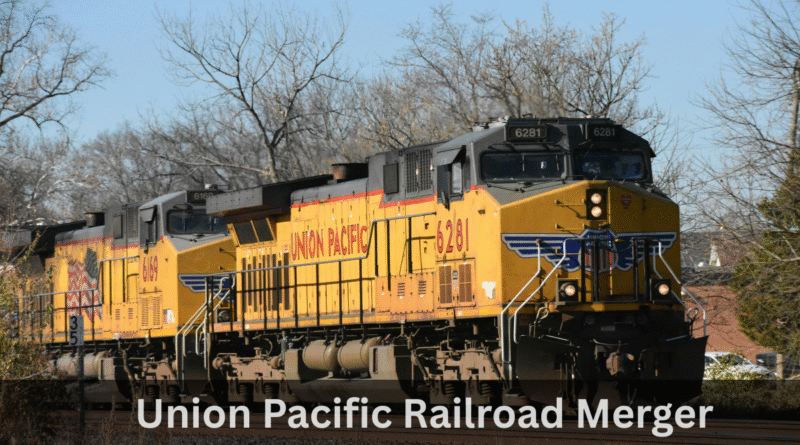
Union Pacific Railroad Merger
The Union Pacific Railroad merger represents a fundamental shift in the United States’ transportation and logistics industry. Union Pacific Railroad Merger: Changing the Future of Freight Transportation: This strategic move intends to improve operating efficiency, broaden network coverage, and strengthen competitiveness in the rail freight market. The merger, which will consolidate resources and streamline services, is projected to result in cost savings and enhanced service reliability. Investors and industry analysts regard this as a big step toward updating rail infrastructure and fulfilling rising freight demand in North America.
The Union Pacific Railroad, recognized as one of the largest and most impactful freight rail networks in the United States, has consistently served as a cornerstone of American industry and transportation. With a history that dates back to the 19th century, Union Pacific (UP) has been instrumental in shaping the economy of the nation, particularly in the western regions of the U.S. Over the years, it has broadened its influence through strategic mergers and acquisitions, evolving into a contemporary rail powerhouse.
A pivotal chapter in Union Pacific’s narrative was marked by its series of significant mergers during the late 20th and early 21st centuries. These mergers redefined the North American railroad landscape, promoting enhanced efficiency, wider coverage, and intense competition.
In this article, we will explore the major mergers involving Union Pacific, their effects on the industry, and the potential future developments.
A Brief History of Union Pacific
President Abraham Lincoln’s signing of the Pacific Railway Act in 1862 marked the beginning of America’s first transcontinental railroad project, the Union Pacific Railroad. The railroad was crucial in linking the eastern and western frontiers of the United States, and construction got underway in Omaha, Nebraska. The transcontinental line was completed in 1869 when Union Pacific and the Central Pacific Railroad notably connected at Promontory Summit, Utah. This turning point transformed American trade, transportation, and westward migration.
By the 20th century, UP had evolved into a principal freight operator, catering to agricultural, automotive, energy, and intermodal sectors throughout the western United States.
Major Union Pacific Mergers and Acquisitions
Union Pacific’s supremacy in the railroad sector was primarily established through a series of calculated mergers. Below are the most notable:
Merger with Missouri Pacific Railroad (1982)
Background: Missouri Pacific (MoPac) was a prominent railroad with routes spanning the central United States.
Merger Impact: This merger enabled Union Pacific to broaden its influence in the Midwest and South. MoPac’s more advanced infrastructure also enhanced UP’s operations and facilitated improved service flexibility.
Merger with Western Pacific Railroad (1983)
Background: Western Pacific operated in California and Nevada, serving as a vital connection to the Pacific Coast.
Merger Impact: This agreement allowed UP to access important West Coast ports and bolstered its transcontinental capabilities.
Acquisition of Chicago and North Western (C&NW) (1995)
Background: C&NW was among the oldest railroads in the Midwest and had a significant freight presence.
Merger Impact: This acquisition reinforced UP’s access to the Chicago hub, one of the most essential freight junctions in North America.
Merger with Southern Pacific (1996)
Background: Southern Pacific (SP), one of the largest railroads in the West and Southwest, was UP’s primary competitor.
Merger Impact: This merger was one of the most consequential in U.S. railroad history. The agreement resulted in the formation of the largest rail network in the nation, extending from the Gulf of Mexico to the Pacific Northwest and across the Midwest.
Regulatory Oversight and Antitrust Issues
The mergers, especially the Southern Pacific transaction, raised antitrust issues and attracted significant scrutiny from the U.S. Surface Transportation Board (STB). Detractors were concerned that such consolidation would diminish competition, increase shipping costs, and lower service quality.
In response, the STB established several conditions to promote fair competition, including:
- Access to specific tracks for shared use.
- Operational protections for smaller rail companies.
- Safeguards for shippers reliant on competitive markets.
- Effects of the Mergers
1. Operational Efficiency
Union Pacific successfully optimized its operations by removing redundant routes and establishing a more integrated rail network.
2. Expanded Coverage
The mergers enabled UP to extend its services to additional regions and industries, providing freight transport from coast to coast and border to border.
3. Economic Growth
The mergers undertaken by UP played a significant role in fostering broader economic development by enhancing freight logistics, reducing transportation expenses, and drawing new industries to areas with rail connectivity.
4. Service Challenges
Following the Southern Pacific merger, Union Pacific faced challenges related to congestion and service delays, particularly in Texas and California. However, these problems were gradually addressed through investments in infrastructure and advancements in technology.
The Prospects for Union Pacific and Railroad Consolidations
As of 2025, Union Pacific stands as one of the two leading freight carriers in the western United States, with BNSF Railway as its primary rival. Although the STB has adopted a more cautious stance regarding the approval of significant mergers in recent years, the Canadian Pacific-Kansas City Southern merger in 2023 has rekindled interest in international railway integration.
Speculation persists regarding the possibility of Union Pacific pursuing future cross-border collaborations or technology-driven acquisitions.
FAQs on Union Pacific Railroad Merger
Q1: What was the most significant merger involving Union Pacific?
A: The 1996 merger with Southern Pacific Railroad was the most significant, creating the largest rail network in the U.S. at the time.
Q2: Why did Union Pacific merge with other railroads?
A: To expand its rail network, improve operational efficiency, gain market share, and better serve industrial and agricultural sectors across more regions.
Q3: How did regulators respond to the mergers?
A: The Surface Transportation Board imposed various conditions to ensure continued competition and protect shippers’ interests.
Q4: Did Union Pacific face problems after the mergers?
Indeed, Union Pacific experienced labor difficulties, service delays, and integration problems following mergers; nevertheless, these were short-term issues, and operations were subsequently normalized.
Q5: Is Union Pacific planning any future mergers?
Yes, Union Pacific plans to merge with Norfolk Southern in a landmark $85 billion deal announced in July 2025.
Q6: What is the Union Pacific Railroad merger?
In 1996, there was a big merger with Southern Pacific Railroad.
Q7. What was the reason behind Union Pacific’s mergers?
To expand its network, reduce competition, and boost efficiency.
Q8. In Union Pacific’s history, which merger was the most important?
The 1996 merger with Southern Pacific Railroad.